At our recent Staff Conference Day, Junior School educators came together for a workshop facilitated by Kirsty Liljegren, Vice-Chairperson of the Reggio Emilia Australia Information Exchange (REAIE), titled The Environment as the Third Teacher: Where Learning Is Not Left to Chance.
Drawing on Reggio Emilia principles, the workshop challenged us to think deeply about the role of the environment in shaping learning, relationships and wellbeing. We explored the idea that the environment itself acts as a teacher – communicating values, inviting curiosity, fostering agency and supporting a sense of belonging.
A key question that emerged throughout the day was: What does it mean to live well in a school?
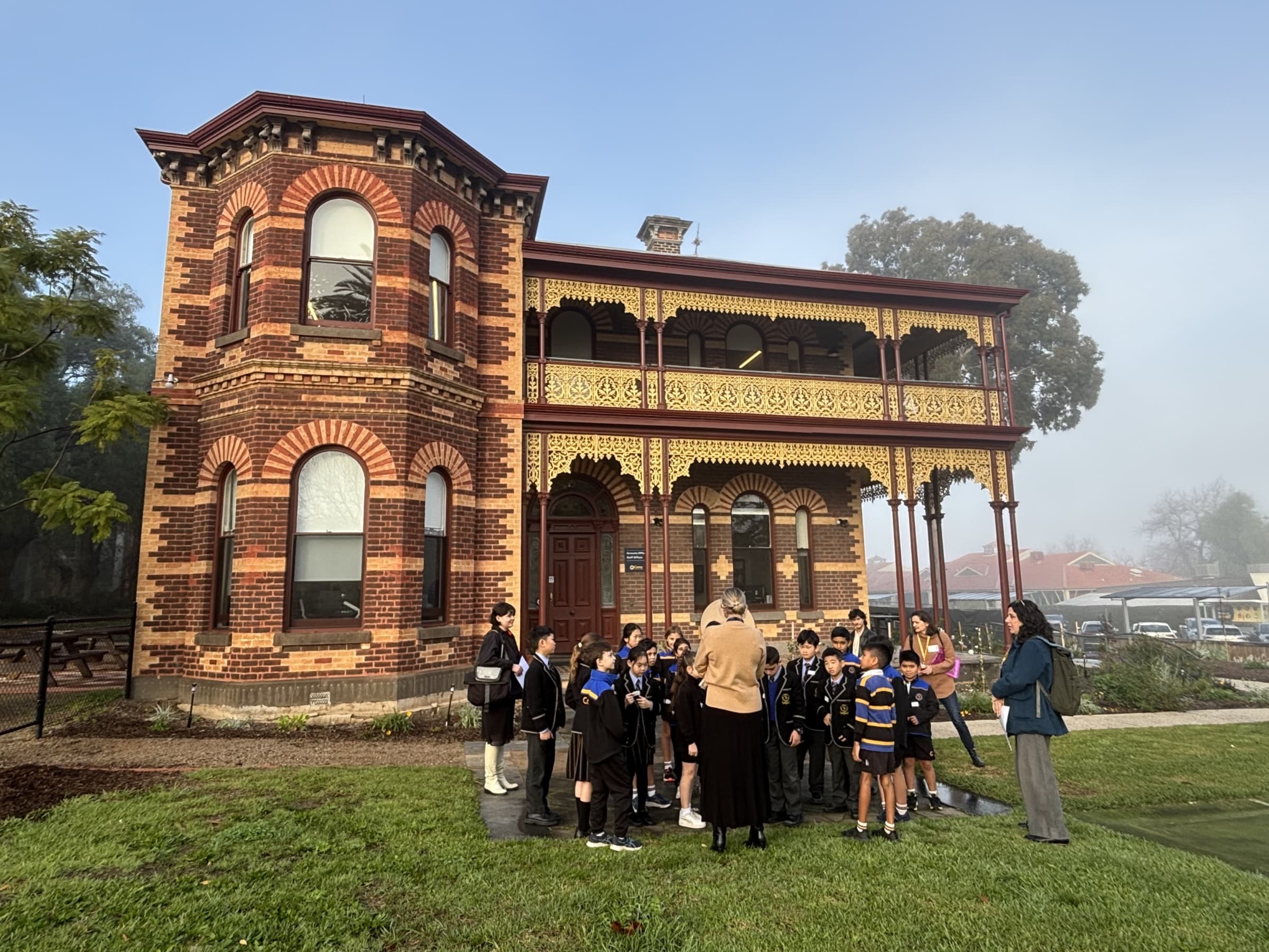
This question has become particularly relevant as we continue planning the learning design and subsequent environments that will support our future Year 5 and 6 program and spaces. In alignment with our belief that children are active contributors to their learning communities, a group of Junior School students recently participated in a consultation process with architects and landscape designers to review the design principles for the new learning spaces.
To help contextualise the work, students began with a site visit. Their observations immediately demonstrated the importance of the environment in shaping experience. On arrival, Alice looked around and exclaimed, ‘I like it already – look at that tree!’
Throughout the consultation, students shared thoughtful ideas about both the indoor and outdoor learning environments. Their contributions reflected many of the concepts explored during the staff workshop: agency, belonging, democratic practices and the relationship between people and place.


When discussing the future indoor learning spaces, students were able to identify elements that already reflect the strengths of our current environments, while also imagining what could make these spaces even better. They described learning environments that are:
- comfortable and cosy
- filled with natural light
- designed with neutral colours and softer lighting
- inclusive of small spaces for reflection and quiet work
- organised and easy to navigate
- calm, without an overwhelming use of colour.
Their thinking revealed a strong awareness of the ways physical spaces influence concentration, wellbeing and learning.
When discussing the outdoor spaces, students emphasised the importance of creating an environment that welcomes more than just people. They encouraged the landscape architects to design spaces that would attract a variety of animal species, recognising the richness that nature brings to everyday learning. Students also expressed a desire for sheltered outdoor areas that could be enjoyed throughout the year, whether on very hot days, during cold weather or when it is raining. For them, living well at school means having opportunities to connect with nature in all seasons.
The consultation process itself was also highly valued by students. Reflecting on the experience, Yash in Year 3 expressed that he felt empowered by being invited to contribute. An important belief that underpins both the Reggio Emilia approach and our work at Carey is that students bring unique perspectives that enrich our collective thinking.
By listening carefully to the children who will ultimately inhabit these spaces, we are better able to understand what it truly means to create a school where learning – and living well – is not left to chance.
Emma Chiera
Deputy Head of Junior School – Personalised Learning