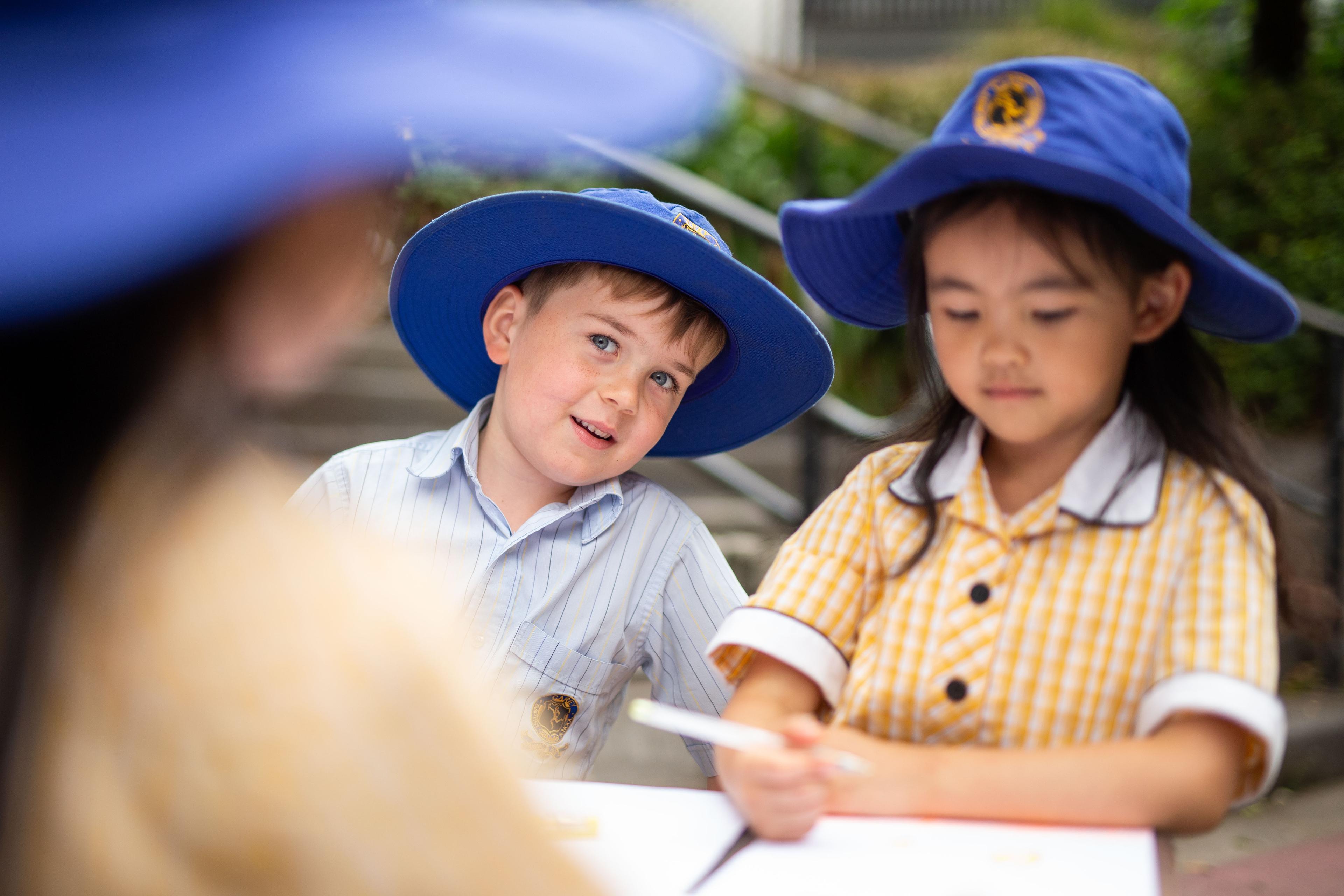

One of the many joys of working in Early Childhood is seeing children’s expressions of the world around them through the arts.
I have strong memories of my childhood playing around with different mediums: clay, paint, charcoal, papier-mache – it was messy and fun. I also remember times when I was clearly directed on what form the art needed to take, and I do remember feeling deflated – why did they all need to look the same? Why did the sky need to be blue and the grass green or the houses the same?
There is much discussion in Early Childhood about process versus product, and allowing children to explore materials, especially in the creative arts, without being concerned with their final product. I do think there is a place for both; this can be very much driven by the children’s experience with the medium and also their age and stage of development.
Each stage of experimenting with materials and creating art is important, and provides a way for children to express themselves. The many types of art are each a way to communicate – it makes up some of Reggio Emilia’s 100 languages.
To begin with, all children need the opportunity to play and experiment with materials, and some children want longer in this stage than others. For example, getting used to clay and the messiness of it, the amount of strength and effort to manipulate the clay as opposed to manipulating play dough. However, there is a point where children need the opportunity to be taught some techniques and skills with art materials, like how to join one bit of clay to another without it cracking, or how to use the right amount of water to smooth the clay without making a mud pile. Having these skills gives children more opportunities and greater freedom to be creative.
Over time, most children begin using art materials with a plan or idea in mind – a ‘product’. Having the skillset to create and achieve their result is important. Other times the children are collaboratively working on a group project with flexibility around the result but a shared goal, contributing their ideas and their own parts to the whole. Currently in the ELC, two room groups have been exploring bugs and mini beasts, and both have created wall dioramas that are a collection of the children’s representations, through different mediums and which are representative of their age, stage of development and skillset. The result has been important as it is the culmination of their shared investigation and creativity.


Often a dilemma for adults is when children ask you to draw the picture of an image they have in their mind; one way around this is to say you will help and they start, or you find a similar image. Dinosaurs and unicorns often seem to be a theme, and having an image in front of them is enough to support their capacity to have a go. Also, like any new skill, once they have mastered the dinosaur or unicorn to their satisfaction, you will see the same picture drawn, painted or created over and over again – just like any new skill, the repetition is a critical step of mastery.
There are many wonderful resources about the arts in early childhood; I am especially fond of Ann Pelo’s work The language of art, a great book with fab pictures! Another inspiring art educator was Ursula Kolbe, who wrote and illustrated many great resource books such as It’s not a bird. I visited Reggio Emilia with her – where some of her inspiration came from – over 30 years ago. Supporting opportunities for children to explore the arts is as important as teaching them the skills. Take notice of where your child is with their creative practice – do they prefer having an end product in mind or are they happier to make marks on a page without a direction? Both approaches are valid and contributing to their creative minds.
Wendy Seidler
ELC Director – Kew campus