There are so many amazing toys on the market these days for children. They’re often sold at a premium, with marketing about how each toy can increase your child’s learning and development in every way, citing the latest information about children’s brain development and the critical nature of the first five years of life.
However, the humble wooden block is still one of the most versatile and simplest toys you can give a child from a very young age, offering diverse opportunities for learning and play. The simple wooden block comes in different sizes, from smallish to large, sometimes in different colours, some now made with bamboo and natural materials, but often just a plain old wooden block.
Just like all children’s play and development, there are different stages of block building, based on how much opportunity children have had to play and experiment with blocks. The 18-month-old loves nothing more than stacking and knocking down the blocks, through the discovery of what blocks can do. This evolves into more complex stacking and developing enclosures (often seen by three years old), to building bridges and balancing the blocks, then combining bridges and enclosures, developing patterns and symmetry, and creating representational structures that are used and created for imaginative play (often seen around four years old).
The learning that develops with block play is significant: elements of science, maths and engineering, or STEM as it is commonly known. The research informs us that spatial reasoning is linked strongly to mathematical skills, and early mathematical skills are linked to later general school success. In addition to spatial awareness, block play encourages problem-solving, counting and subtracting, measuring, developing and working in a three-dimensional space, understanding perspective, and trial and error, as well as the development of language, social and negotiation skills in a group environment.
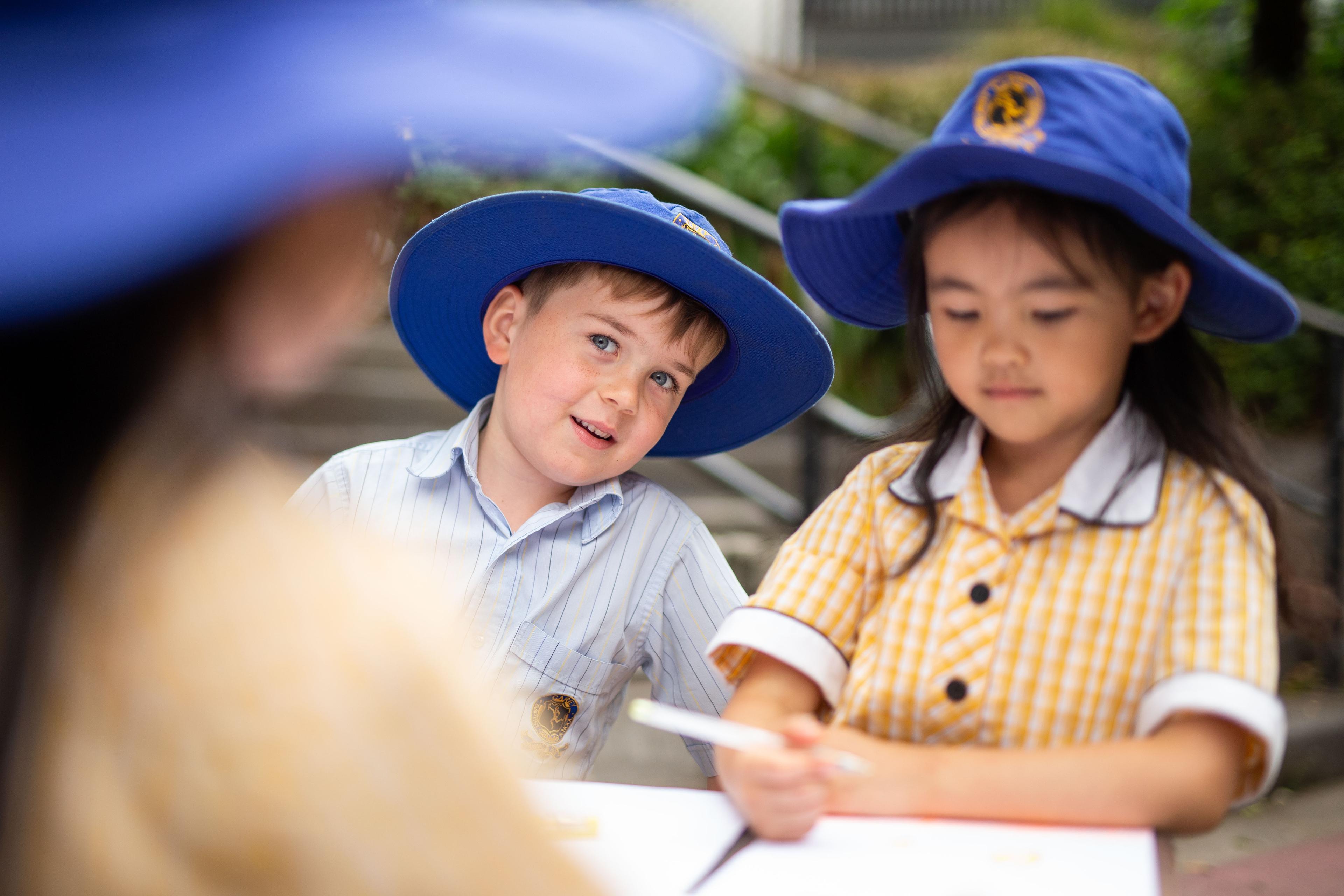
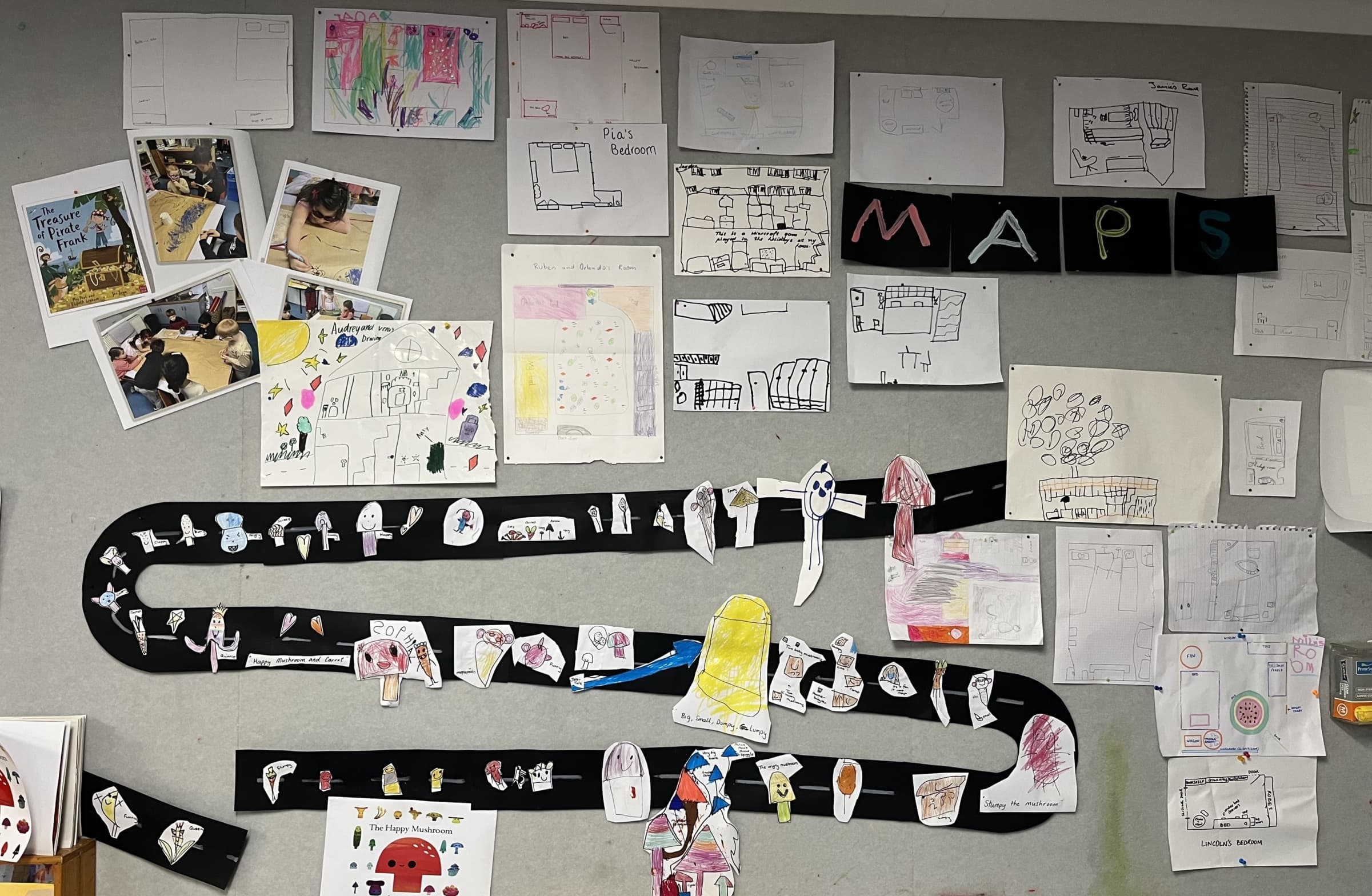
Blocks are enduring pieces of equipment that we generally refer to as ‘loose parts’, because there is no right or wrong way to use them. If you look at the feature image above, you will see that the children have been playing with the ideas of maps – their capacity to do this has developed from strong block-building skills.
What are your memories of building with blocks? How might you support your child with this unstructured and creative toy? What can you create and build together?
Wendy Seidler
ELC Director – Kew campus