
17 September 2026
Student voice, diverse perspectives and healthy debate
‘Freedom is hammered out on the anvil of discussion, dissent and debate.’ – Hubert H. Humphrey
I am fortunate to be attending a speech at the Menzies Institute today by Lord Andrew Roberts about ‘One Soaring Imagination: The Destiny of the English-Speaking Peoples in the Twenty-First Century’. Roberts is definitely not everybody’s cup of tea, but he is a Cambridge Scholar, extremely well researched and a published author, and he has some ideas that are worth examining and listening to.
In one of his earlier publications, Roberts made a comparison about the cabinets and advisors of Hitler and Churchill during World War II that I found fascinating. In his cabinet, Churchill had people he disagreed with and, at times, did not much like, because he knew they prioritised Britain’s best interests. He wanted to ensure every decision he made, which inevitably decided the fate of his people, was the right one. Hitler, on the other hand, was so despotic and tyrannical that his generals and other leaders often told him what they knew he wanted to hear and lied to him about the progress of the war to appease and survive.
Engaging in debate and discussion is an essential part of developing an understanding of the world. It is true for all of us, but especially for young people today, that we must have exposure to a wide range of experiences, perspectives and influences within our environment to develop, adapt and understand ourselves and others. When students are challenged in an age-appropriate way, they will grow into strong and capable adults, able to engage productively with ideas and people that may confront their beliefs and moral convictions.
Lately, Carey has taken part in boundless opportunities in which student voice has been at the helm. Students are expressing themselves through writing, debating and advocacy. For example, Carey recently took part in the Mock Trials Victorian competition at Monash University with outstanding results. In preparing and arguing civil and criminal cases, the students built arguments, supported them with evidence and listened to opposing teams with respect.
A number of students also recently took part in the First Speech Competition organised by the local member for Kew, Jess Wilson MP. Students were asked to step into the shoes of a newly elected Member of Parliament and deliver a three-minute speech outlining their vision for the future. Students were encouraged to focus on a local issue, examining its causes, proposing practical solutions and reflecting both their personal values and those of our community. A number of students took part and all were outstanding. Ellie, one of our Year 11 students, was voted the winner, with Howard and Ava close behind. Ellie travelled to Parliament House and spoke on housing affordability in Victoria. She spoke with passion and combined her storytelling with statistics and evidence. It was a brilliant example of a student challenging and questioning our government with decency and respect.


Our debating team continues to push through their competition and has made it to the finals. With social media and ideas spreading views so quickly and with little accountability, the art of understanding both sides of an argument, anticipating an argument and then being prepared to counter argue has become a dying art. This is not the case for some of our brilliant Carey students who have, at times, convincingly defended positions they do not personally hold.
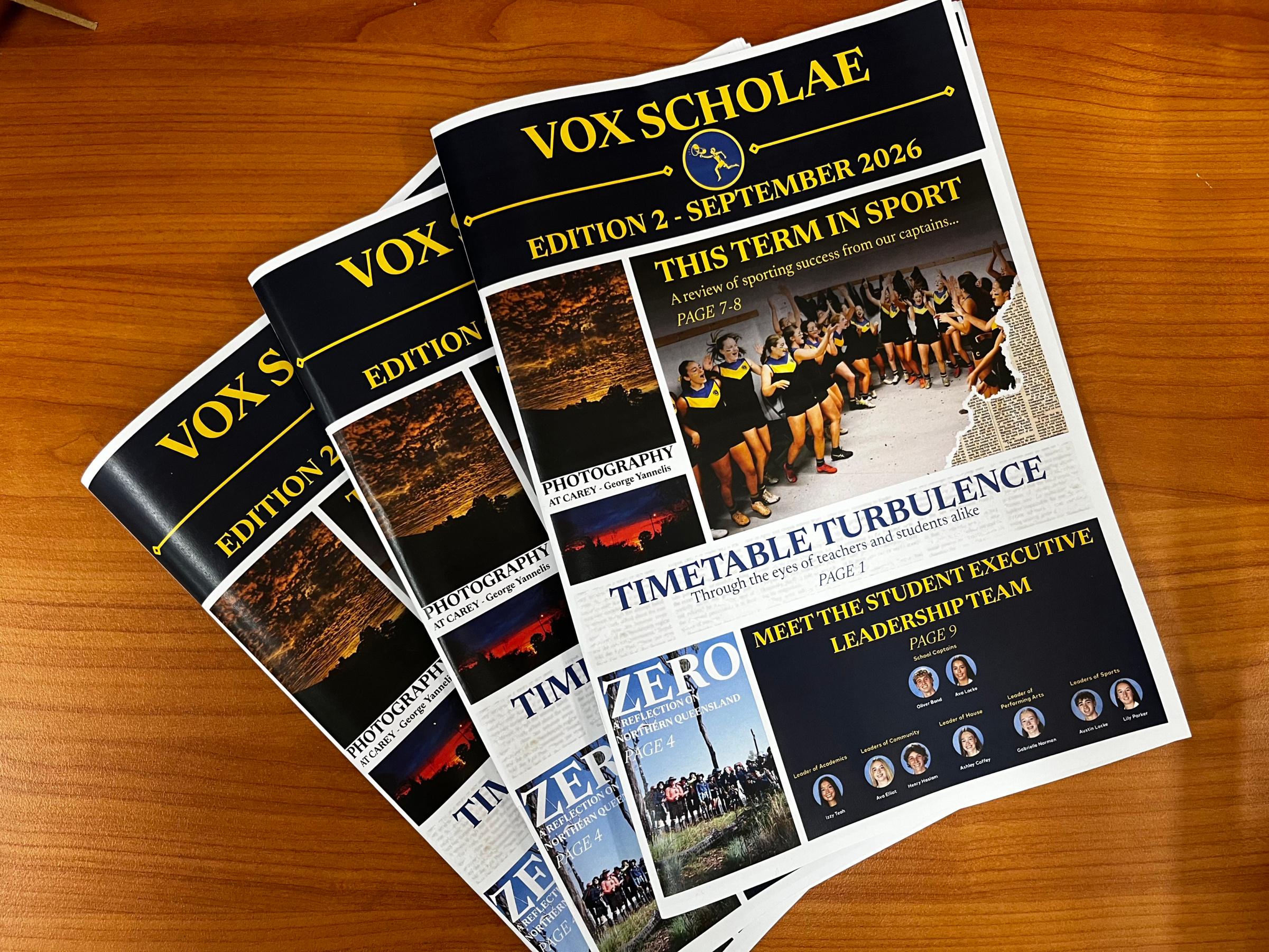
Finally, the second edition of our newly created student newspaper, Vox Scholae, was published this week and marks another important form of student voice with their expression of ideas and reflection. Students have already learnt through this process that the freedom to express their views comes with many responsibilities: giving fair representation, substantiating their claims and accepting their ideas will be challenged.
Once defined by the Carey community as that learning ‘flow’, the best meetings I still experience today are ones which have strong debate, diverse perspectives and varying ideas that always have best interests of our students at heart. We become better educators, leaders and people when we open ourselves to others’ perspectives, and it is an example we can live by to show our students that they can do the same.
‘He who knows only his own side of the case knows little of that.’ – John Stuart Mill
Christian Gregory
Deputy Head of Senior School – Student Wellbeing