What an extraordinary response we have seen to this year’s Food Train, supporting the work of the LifeCare Community Food Pantry.
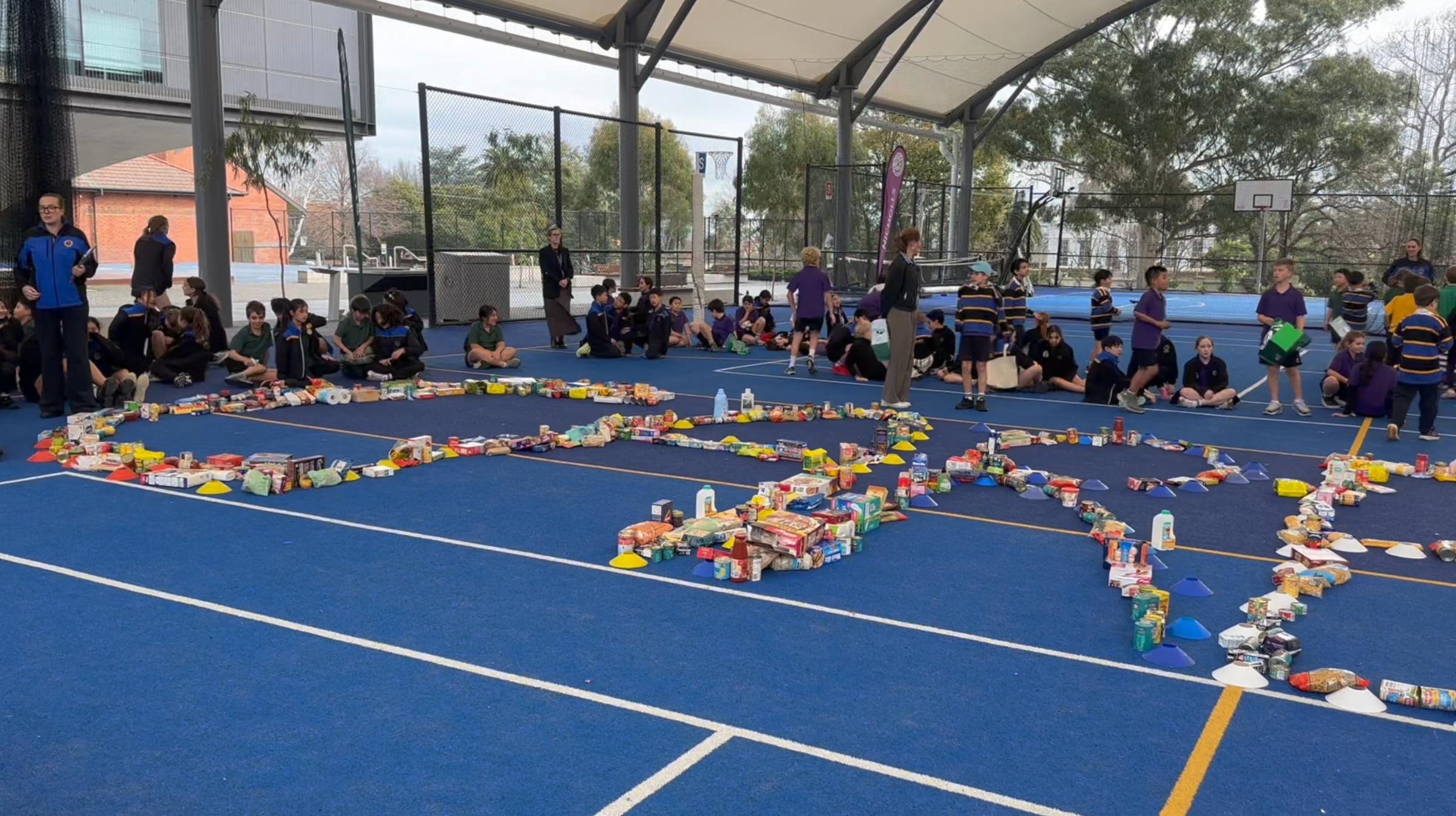
As the donations were laid out across Macafee Court, spelling out ‘CAREY CARES’, they represented far more than pantry and household items. They were a wonderful demonstration of our students and families choosing to notice the needs of others and respond with generosity.
When I first spoke with David at LifeCare to arrange for the donations to be transported, he mentioned that he would bring his SUV. Knowing the generosity of our Junior School community, I suggested he might want to bring a trailer as well!
A week later, David arrived and was overwhelmed by just how much our Junior School families had given. Looking at the enormous collection, he simply said, ‘I’m glad you suggested a trailer!’
What a wonderful reflection of the generosity of our community.
For our children, the Food Train also provides an important opportunity to consider our place in the world and how we respond when we are fortunate enough to have plenty.
The Bible speaks beautifully about this in 2 Corinthians 8:14: ‘At the present time your plenty will supply what they need.’
This simple verse captures something at the heart of the Food Train. When we recognise that we have enough, we have an opportunity to look beyond ourselves and ask, ‘What can I share?’

Throughout the Bible, generosity is presented as a natural response to what we have received from God. Hebrews 13:16 encourages us, ‘And do not forget to do good and to share with others, for with such sacrifices God is pleased.’ Jesus expresses the same idea beautifully and simply: ‘Freely you have received; freely give’ (Matthew 10:8). To some this verse might be surprising. However, when you recognise how much of what is good in your life has been given to you – through other people, opportunities, circumstances, love or kindness – it changes how you view what you have. Rather than holding tightly to it, you become more willing to share it with others. Generosity turns gratitude into action.
Through the Food Train, our students and families have done exactly that. Each tin, packet, bottle and household item brought to school may seem small on its own, but together they become something significant – shelves stocked, hampers filled and practical support offered to individuals and families in our local community.
It is wonderful to see our students discovering that generosity does not depend on doing something enormous. Small acts, when multiplied across a community, can make a very real difference.
I also want to celebrate the families behind our students. When children see generosity modelled at home, participate in choosing something to give or talk around the dinner table about why another family might need some extra support, we help shape an understanding that what we have is not simply ours to enjoy. What we have can also become something we use to bless others.
This is one of the hopes we have for our Carey students: that they will increasingly see themselves as people who can make a positive difference in their world. That they will notice, care and act. And that when they encounter a need, their response might be, ‘I have something I can contribute.’
Thank you to every student and family who contributed to this year’s Food Train. Your generosity has provided practical support for the important work of the LifeCare Community Food Pantry, but it has also demonstrated something powerful to our children: when a community shares what it has, together we can make a difference.
When we each give a little, together we can give a lot.
Rebecca Loveday
Junior School Chaplain