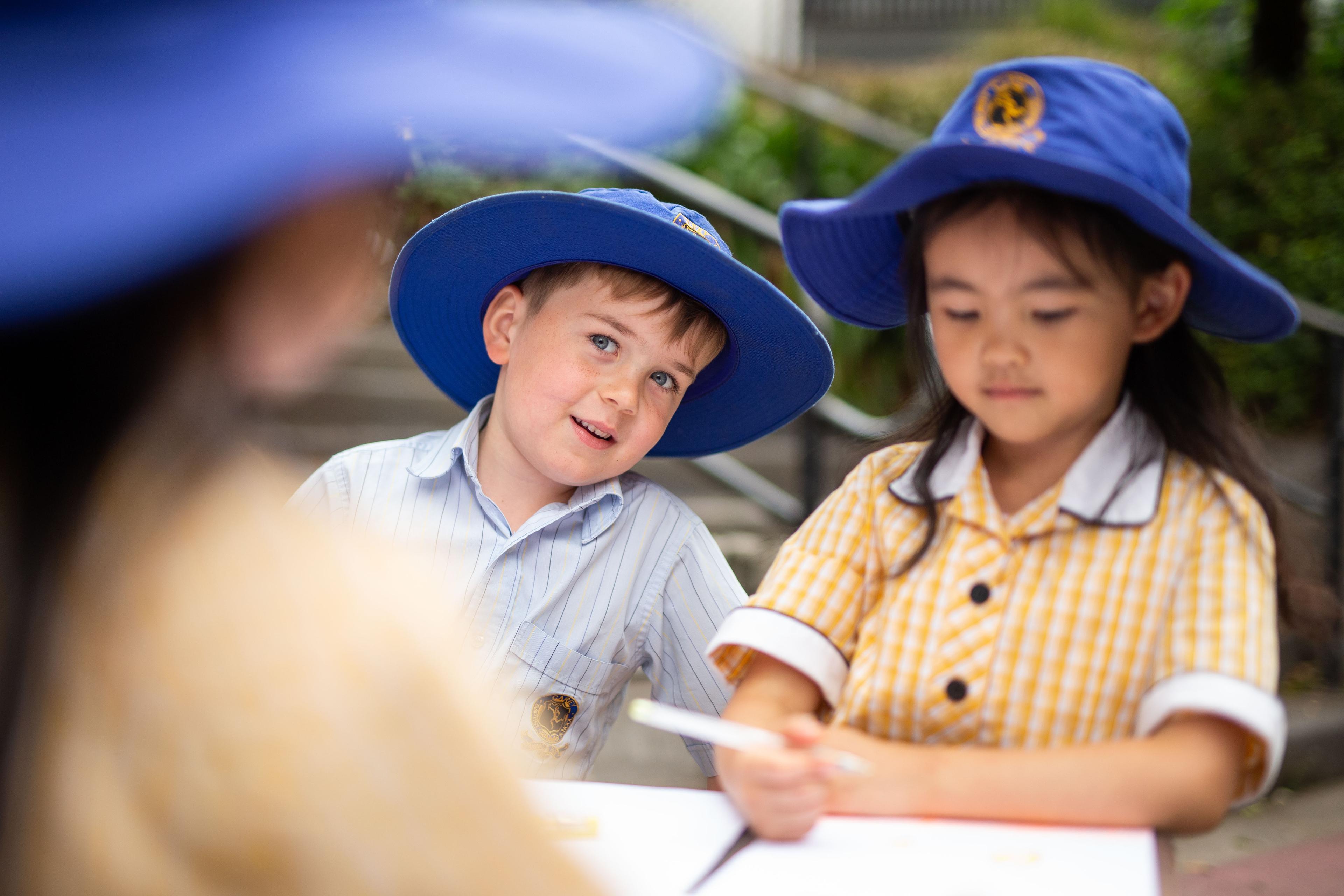

Welcome to our first newsletter for the year. It has been a joy to see how quickly the children have settled back into their routines and reconnected with the rhythms of school life. There is a wonderful sense of energy across our Early Learning Centre (ELC) and Junior School campuses as classrooms come alive with learning, friendships are renewed and the year begins to take shape.
Prior to welcoming our students back, all Carey staff engaged in three days of professional learning. These days were intentional and reflective, providing space to consider our practice as educators, our wellbeing as staff, the changing educational landscape and the significance of our role in the lives of the young people and families we serve. A highlight of this learning was a professional learning session for all ELC and Junior School staff with Kirsty Liljegren, Vice Chairperson of the Reggio Emilia Australia Exchange (REAIE). This session invited us to pause, reflect and challenge our thinking about children, learning and our role as educators.

Central to this work was the thinking of Loris Malaguzzi, the founding father of the Reggio Emilia approach. His powerful essay title Your image of the child: where teaching begins anchored our conversations and guided our reflections. Together, staff worked collaboratively to articulate how we view children. Words such as full of potential, curious, brave and lifelong learners emerged strongly across teams. These words are not just descriptors; they shape the decisions we make every day in our classrooms.
An important part of the session encouraged us to explore the reciprocity of our beliefs and practices. In simple terms, if we hold a strong belief about children, what does that require of us? For example, we believe children are curious, therefore our role and responsibility is to deliberately design learning experiences where curiosity is nurtured, protected and extended.
We also reflected on the idea that children desire complexity and are capable of deep thinking. We view children as active protagonists in their own growth and development, not passive recipients of information. This is something we see naturally playing out in our ELC environments across both campuses, where children explore, inquire and construct meaning through rich experiences. Our commitment is to continue to leverage this approach and way of thinking throughout the Junior School years, ensuring continuity in how children experience learning.
As we move forward, a key focus for us will be exploring how our theories translate into practice. How do our classrooms, learning spaces and environments reflect our beliefs about the learner? Do our environments communicate trust, capability and possibility? These are questions we will continue to return to together as a staff.
I would also like to leave you, our families, with a provocation. What is your image of your child? How does this image translate into how you parent? For example, if you believe your child is capable, how are you nurturing this quality at home through the opportunities you provide, the challenges you allow and the trust you show?
We look forward to a year of partnership, reflection and growth, grounded in a shared belief in the incredible potential of every child.
Kylie Baxter
Deputy Principal – ELC–Year 6