
There is a great deal of talk these days about ‘executive functioning’ in the media, in education and amongst parents. Let’s discuss what it is, why it is important, how it applies in the Early Learning context and how parents can help support this development.
What is executive functioning?
Executive functioning is often referred to as a set of skills that relies on three important brain functions – working memory, flexibility and self-control. It is the capacity of the brain to hold onto and work with information, focus thinking, filter distractions and switch gears – it is the ability to manage a lot all at once. The analogy is sometimes made of an air traffic controller managing a very busy runway.
Executive functioning skills are needed in everyday life. They allow us to stay on task; remember what we were doing or going to do; make adjustments when plans change; managing waiting, turn-taking and delayed gratification; and avoiding distraction. When executive functioning is a challenge, you’ll see trouble with planning, prioritisation, organisation and staying on a task.
Executive functioning in developing brains
Babies are not born with these skills, but they are born with the potential to develop it. Early Learning Centres develop a supportive and intentional environment through play, routines and secure attachments that enable these skills to be learnt, practised and grown through support and repetition.
Another helpful analogy is to think of this developmental stage as going to the gym for your brain. The active repetition is necessary to build the executive functioning muscles. As with the gym, consistency is key to building strength, and regular practice supports the development of the essential skills. And, as is the case for many of us, a trusted gym buddy or personal trainer can enhance our results: parents and educators can help guide children’s development, encourage consistency and model the appropriate skills.
Many age-and-stage-appropriate opportunities are intentionally provided across all years in the ELC to support the development, practice and repetition of these crucial skills. Predictable routines for children, from their arrival in the morning and throughout the day until their departure in the afternoon, supports their working memory. When children are fully engaged in routines like carrying their bags and putting drink bottles and other items in appropriate places, they understand the order in which tasks must happen, which teaches them to enact each task independently over time.


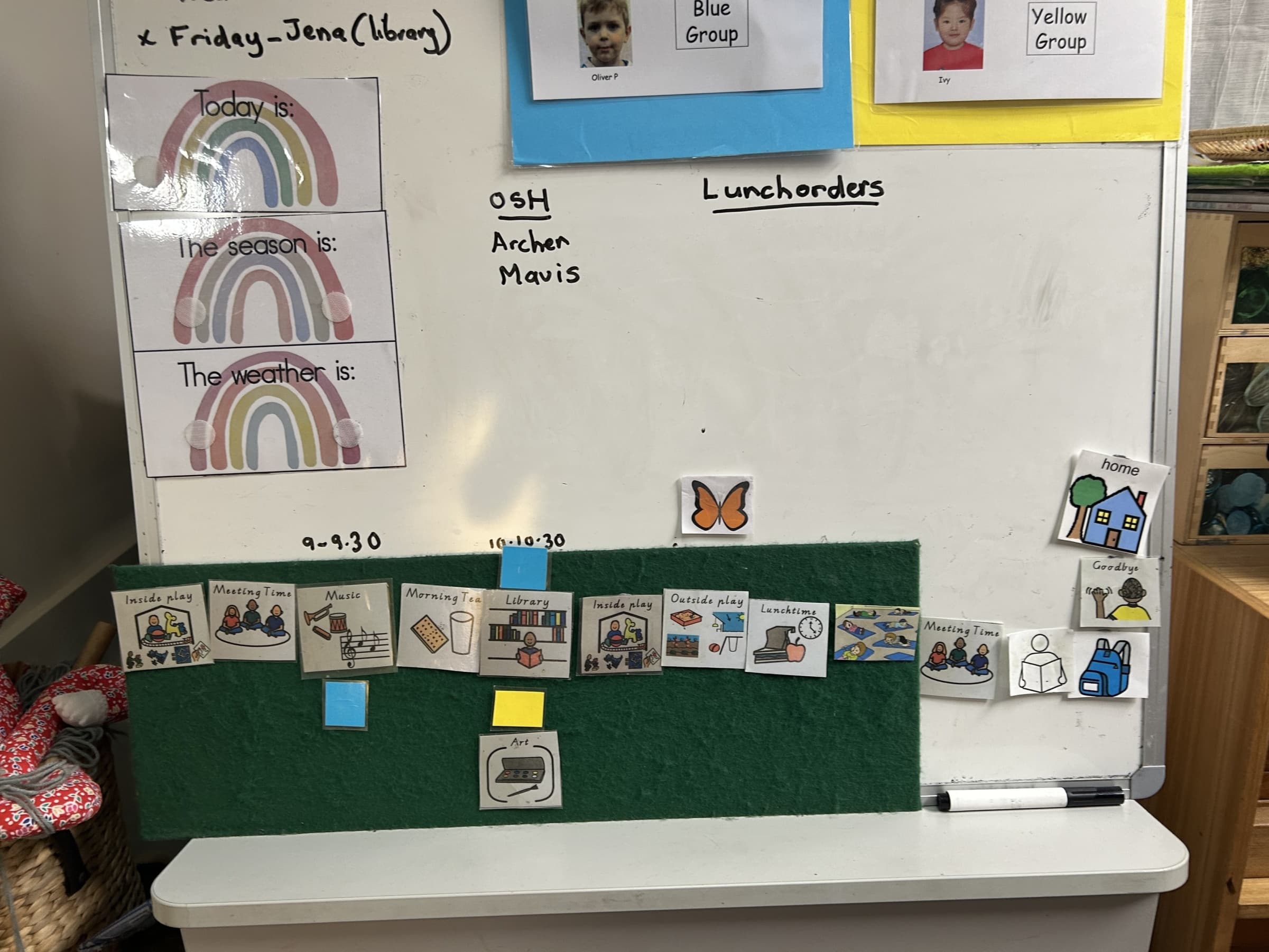
All of the ELC rooms have various visual daily schedules that support the children to develop planning and problem-solving skills. This helps them to take turns, work in teams and listen to others, complete tasks and participate in group activities, and supports their development in inhibition control. Problem-solving in small groups and larger class groups, developing mental flexibility and making adjustments all support the developing areas of executive function skills.
Parents can support this development too
Children tend to build more effective executive functioning skills if the important adults in their lives actively support them. This includes taking the time to encourage their efforts, modelling the skills, engaging in activities where they can practise them, providing a consistent and reliable presence and guiding and supporting them from dependence to independence. This can all be done in age-and-stage-appropriate ways – for example, many toddlers will carry their own bags and take their drink bottles into the room, with parents giving them the time and support they need to do this task. These tasks at the beginning and end of the day, like packing their bags and being responsible for their belongings, are important makers of the rhythm of the day, as well as opportunities for children to take responsibility for their things.
Please feel free to talk to any of the teachers about executive functioning and what else you might do to support your child.
Wendy Seidler
ELC Director – Kew campus