4 December 2025
Pioneers on the pitch: the story of girls’ cricket at Carey

More than 40 years after Carey’s first season of girls’ cricket, the 2025/26 summer season marks its powerful resurgence as the Carey girls compete in the first ever Associated Grammar Schools Victoria (AGSV)/Associated Public Schools (APS) Girls First XI Cricket competition.
The road to this exciting development began in 1982, when a group of eighth-form students – many of whom had never held a bat before – took to the field for the very first time. With only a few weeks to learn the basics, they trained enthusiastically under the guidance of Mrs Robyn Brewin (then Macready-Bryan), mistress-in-charge, supported by Sandra Myerscough (1982). Early matches were played against Ruyton, Balwyn High, Canterbury Girls’ High and Murrumbeena High. Reflecting on those first seasons, Robyn says, ‘We didn’t have a proper competition for the first few years … I had to ring around schools and organise games.’
The ESA era
Although girls’ cricket did not run in 1983, the momentum returned in 1984 when Carey joined the Eastern Suburbs Association (ESA) sports competition. Competing alongside Camberwell Girls’ Grammar, Ivanhoe Girls’, Melbourne Girls’ Grammar, Strathcona, Methodist Ladies’ College, Presbyterian Ladies’ College and Loreto Mandeville Hall, Carey students took part in the ESA’s vibrant mid-week program, which included tennis, baseball, softball, swimming, netball, hockey, athletics, cross country, basketball and cricket.
Cricket quickly gathered strength, thanks largely to the vision and commitment of Robyn Brewin, who played an instrumental role in nurturing the sport at Carey. By the late 1980s the program was flourishing. In 1990, the Senior Girls Cricket Team, coached by Reverend Ivan Poole (1955), went through the ESA season undefeated and earned a place in the Victorian Schoolgirls’ Cricket Championships, finishing runners up. This strong period continued into the early 1990s, with undefeated seasons in both 1994 and 1995 – an exceptional achievement that reflected the growing depth of talent.
Reverend Poole remarked:
‘With Robyn Brewin, they began serious coaching of these keen girls. The boys in the First XI helped too, with practice in the nets and other support. It was a bit difficult at first to teach the girls to bowl overarm, but they built up a good team and played properly.’
By 2000, however, girls’ cricket had faded from the sporting calendar.
Carey’s cricketing legends
The sport’s story took an extraordinary turn in 2003 with the arrival of future Australian captain Meg Lanning (2009). With no girls’ team available, Meg played alongside the boys, and in Year 9 made history as the first female to play First XI Cricket in the APS competition, breaking a century of tradition. Her rise was rapid: a year after finishing school she debuted for Australia and, within weeks, became the youngest Australian to score an international century. At just 21, she became the youngest player to captain the Australian Women’s Cricket Team.
Over the years, many talented players have represented Victoria, including Kim Neilson (1991), Anna Lanning (2011) and Stephanie Theodore (1989), who was the first Carey girl to play cricket for the state and the first Carey girl to play for the Australian national women's cricket team. Fiona Huber (Elliott, 1995) also represented Australia in the Mixed Indoor Cricket team.
Reviving a beloved program
Girls’ cricket re-emerged in 2018 with a Middle School team coached by Sally Nelson. The team competed in the inaugural AGSV/APS Girls Cricket competition, defeating Mentone Grammar in the final. Organised in partnership with Cricket Victoria, the four-week T20 Blast competition for Years 7 to 9 involved four schools: Carey, Mentone Grammar, Penleigh and Essendon Grammar, and Ivanhoe Grammar.
The Middle School team has continued to find success, both in competition and in the fun and close-knit environment it creates for our Years 7 to 9 girls.
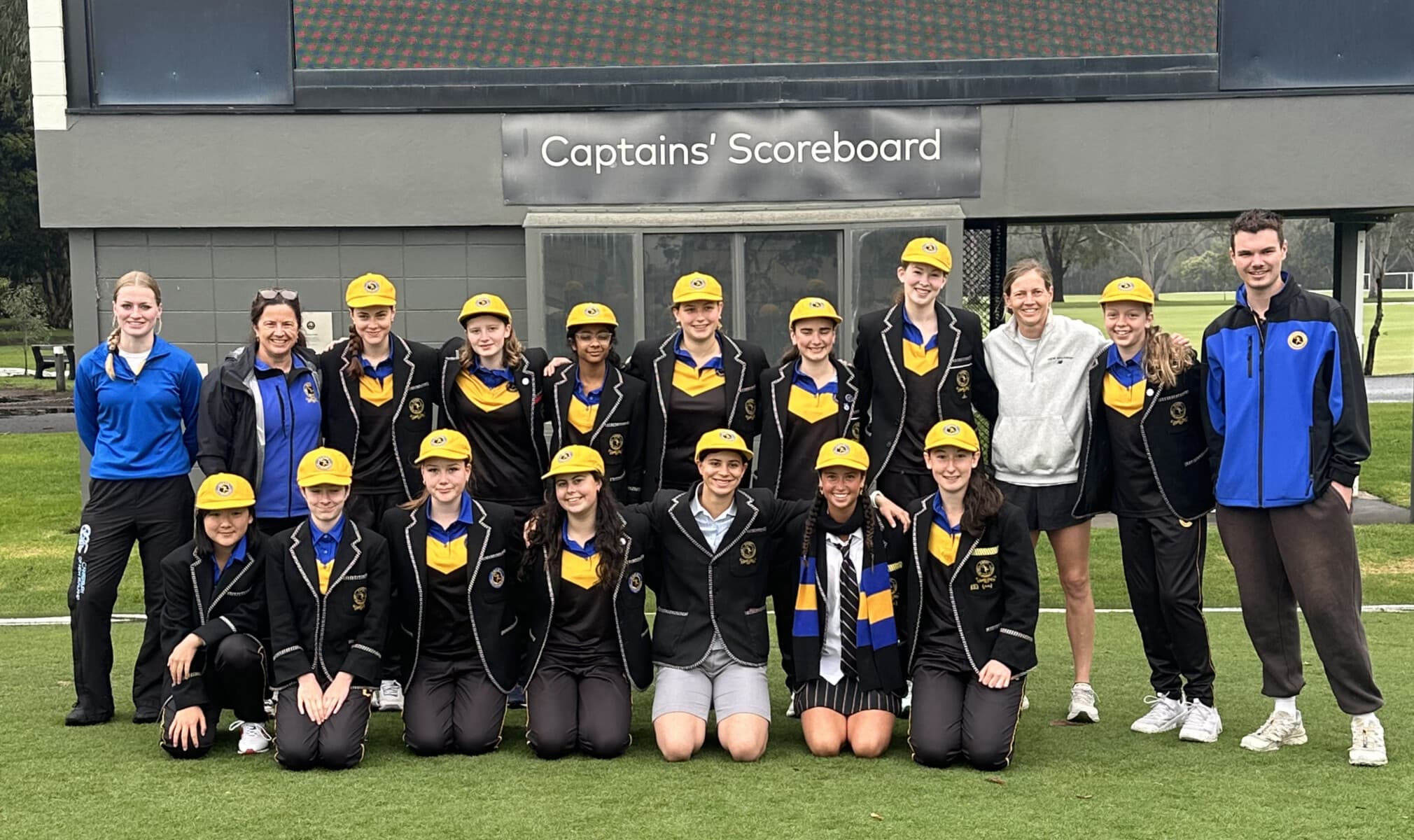
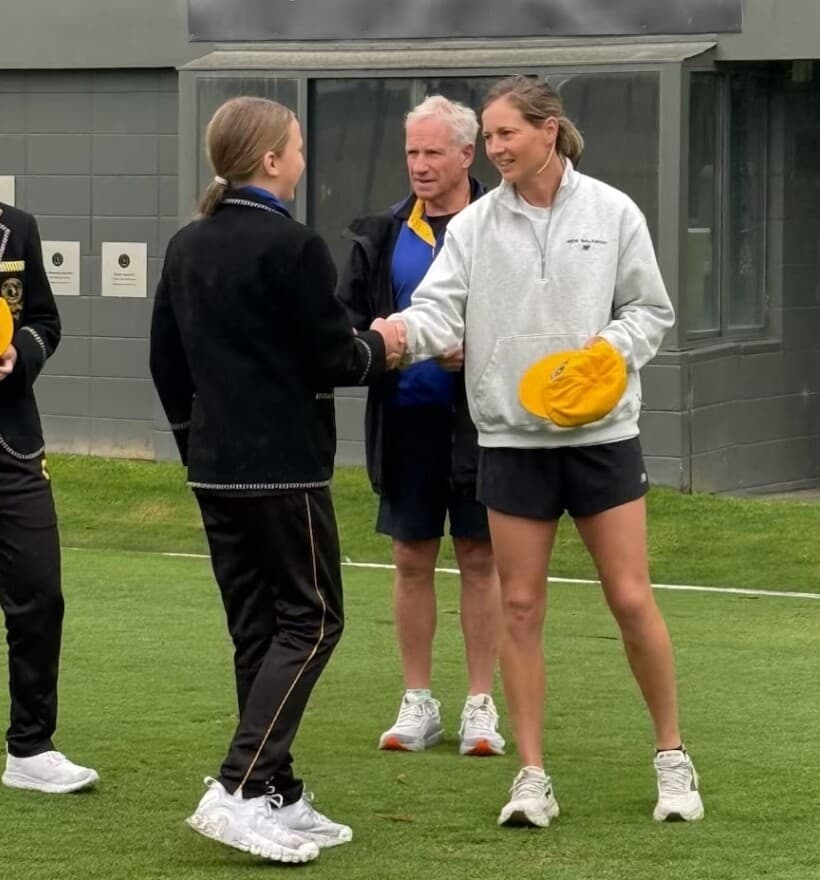
The excitement was palpable as our inaugural APS/AGSV Girls First XI Cricket Team took to the pitch in October this year. They are already seeing great success, including the first century in the competition achieved by Year 10 student Lily, and the girls were honoured to be presented their baggy yellow caps this week by Meg Lanning.
From its grassroots beginnings in the ESA to its proud inclusion in AGSV/APS sport today, girls’ cricket at Carey stands as a testament to courage, opportunity and perseverance. Its story reflects the School’s enduring commitment to participation and equality.
Helen Wolff
Archivist, Community Engagement