2 April 2026
Building confidence, collaboration and creativity through the arts

This year, our Junior School is proud to introduce an expanded Performing Arts offering as part of our commitment to nurturing the creativity, wellbeing and social development of every young person. This shift is grounded in contemporary educational research, aligned with the Victorian Curriculum and shaped by the voices of our students.
Extensive population-level research shows that when children participate in arts activities – such as dance, music, drama and visual arts – they tend to be more attentive, demonstrate stronger and more consistent prosocial behaviours such as empathy, co-operation and kindness, and engage in more positive social interactions across time. These patterns appear linked to the arts’ ability to support creativity, communication, self-esteem and self-regulation.
Research also highlights that although academic disciplines often study music, dance, theatre, literature and visual art separately, this separation does not reflect how humans naturally experience the arts. Across cultures, artistic expression is fundamentally integrated as seen in opera, ballet, musical theatre, cinema, music videos, performance art and religious ceremonies, where movement, sound, storytelling and design work together. This aligns with the 18th century concept of the Gesamtkunstwerk, or ‘total work of art’, in which multiple artforms merge to create rich, unified creative experiences. Such evidence reinforces the value of offering an integrated Performing Arts program that mirrors how the arts function in real life and supports holistic creativity in young people.
This approach is firmly supported by the Victorian Curriculum, which identifies Dance, Drama and Music as core Arts disciplines. Learning in these areas is structured around four interconnected strands – Explore and Express Ideas; Practices; Present and Perform; and Respond and Interpret – which encourage integrated, expressive and collaborative learning.

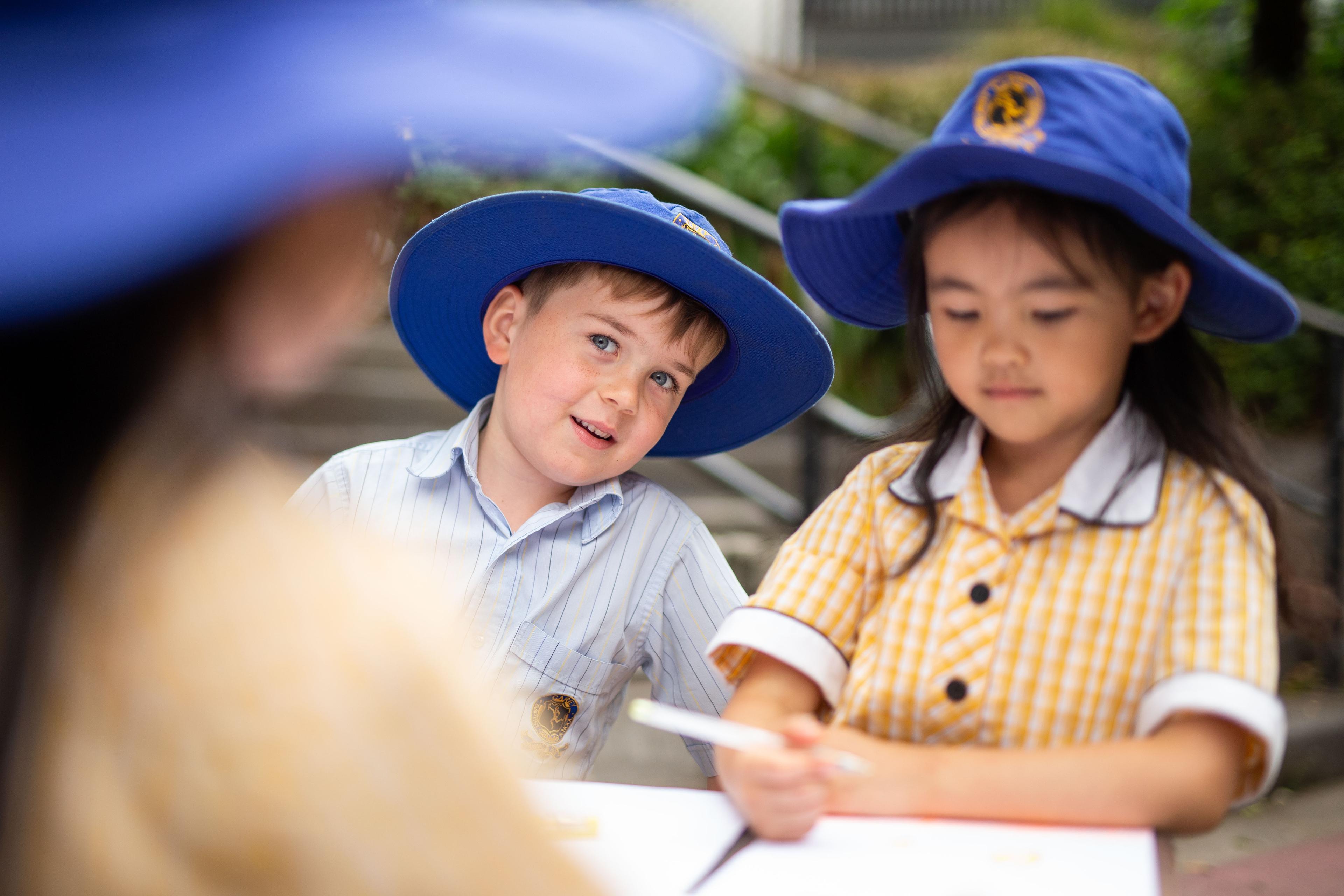
Our students are already noticing the benefits of engaging in this richer learning environment. Charlotte shared that she is enjoying the interactive nature of Performing Arts, particularly as she has the opportunity to explore dance for the first time. Grace appreciates the variety of experiences, noting that activities such as choreography and rhythm games are helping deepen her understanding of music. Josh describes lessons as ‘interactive and engaging’, emphasising that the class is ‘learning to work in unison’, with each person contributing different parts that come together to create something meaningful. He values how collaboration allows students to ‘be more social and share our thoughts’, and that the learning ‘feels more free.’ Jem highlighted the breadth of opportunities now available, saying that in Performing Arts they are engaging with ‘singing, dancing and drama’.
Educational thinker Sir Ken Robinson argues that traditional schooling reinforces hierarchies that place some artforms above others, limiting children’s creative potential by valuing certain types of intelligence at the expense of others. Our shift to a broader, more inclusive Performing Arts offering directly responds to this challenge by elevating all forms of expression and providing wider creative pathways for every student.
By expanding our specialist offering, we are investing in a learning environment where every young person can thrive – creatively, socially and emotionally. We look forward to watching our students continue to grow as confident, expressive and imaginative learners through our new Performing Arts offering.
Emma Chiera
Deputy Head of Junior School – Personalised Learning